













Call us, we are currently working
+90 536 771 29 16

How to extend the stay of a car with foreign license plates in Turkey in 2025: A complete guide

Turkey remains one of the most popular destinations for road travelers and relocators. However, the rules for the temporary importation of vehicles (the so-called “Triptik”) are strictly regulated by the Turkish Ministry of Commerce (Ticaret Bakanlığı) and are constantly being updated. In 2025, important amendments are in effect that directly affect the possibility of extending the stay of a car with foreign license plates in the country.

This article, prepared taking into account official data from Ticaret Bakanlığı and Turkiye Turing ve Otomobil Kurumu (TURING), provides a comprehensive guide to the legal use and extension of your car’s stay in Turkey in 2025.

Fundamental rules of temporary importation

The possibility of importing and the length of stay of a foreign car in Turkey depend on two key factors: the residence status of the owner and compliance with the 185-day rule.

The condition of “Living abroad” (Yurtdışında Yerleşik Olma)

To be eligible for temporary importation of a car, the owner must be recognized as “residing outside Turkey.” This means that at the time of entry into Turkey, he must have actually been outside the country for at least 185 days during the last year (365 days).

  • How does 185 days count? All entries and exits from Turkey over the past year are taken into account. 185 days are not required to be continuous.
  • Status Verification: Turkish citizens can check their “yurtdışında yerleşik olma” status through the e-government portal E-Devlet using the “Yurt Dışında Yerleşiklik Sorgulama” service.

Maximum stay (730 days)

For persons who meet the condition of “residence abroad”, the maximum total period of temporary importation of a car is 730 days (2 years).

Owner’s category The maximum length of stay of the car The condition of the extension
Turkish citizens and foreigners with a residence permit 730 days The duration of the car’s stay cannot exceed the validity period of the residence permit.
Foreigners without a residence permit 90 days (within 180 days) An extension is not possible.
Pensioners from abroad 730 days The 185-day rule does not apply to the first importation after retirement.

Important: If you leave Turkey by car before the expiration of 730 days, the next time you enter, the period will be reduced by the number of days spent in Turkey. In order to receive a new full period of 730 days, it is necessary to fulfill the condition of 185 days of stay abroad again.

Legalization and “Extension” through guest rooms (MA-MZ)

In Turkey, there is no procedure for “extending” the temporary importation of a car beyond the established period of 730 days. However, owners of certain types of residence permits can legalize their vehicle by obtaining special Turkish guest numbers (MA–MZ series).

Who is eligible for legalization?

Foreigners with the following residence permits have the right to legalize (temporary import with collateral):

  1. A working residence permit (Çalışma Izni).
  2. Student residence permit (Öğrenci Ikamet Izni).
  3. A pensionable residence permit (if there is a corresponding certificate).

A tourist or family residence permit does not grant the right to legalize a car.

Legalization procedure (TURING)

Legalization is carried out through the authorized organization Turkiye Turing ve Otomobil Kurumu (TURING) and includes the following steps::

  1. Contacting TURING: Submitting an application and the necessary documents.
  2. Collateral assessment and calculation: TURING evaluates the vehicle and calculates the amount of customs duty (ÖTV and KDV) to be paid as collateral (guarantee). The deposit is returned to the owner upon final removal of the car from Turkey.
  3. Getting MA-MZ numbers: After making a deposit and checking in, the car is assigned Turkish guest numbers.
  4. Duration of use: The car can stay in the country for up to two years, with the possibility of subsequent extensions if the validity period of the residence permit or work permit is also extended.

Critical condition: The 185-day rule for legalization

The most important condition for obtaining MA-MZ numbers is to comply with the 185-day rule in the context of the date of obtaining a residence permit:

No more than 185 days should elapse between the date of entry of the car into Turkey and the date of receipt of a work, student or retirement residence permit.

If this period is exceeded, it is no longer possible to apply for legalization (customs clearance with a deposit), and the car must be removed from the country.

Special status for cars from Ukraine (2025)

Due to the martial law in Ukraine, the Turkish authorities have previously provided multiple automatic extensions of the stay of Ukrainian cars. However, this practice will cease in 2025.

  • Official termination: Automatic renewal based on a special provision is cancelled.
  • Deadline: The last validity period of previously issued extensions is set until December 31, 2025.
  • Owners’ actions: Owners of Ukrainian cars who have been in Turkey for more than two years must either remove the vehicle or legalize it according to standard rules by the end of 2025 (through TURING, if they meet the 185-day condition and have a corresponding residence permit).

Fines and sanctions (Tariffs 2025)

Violation of the rules of temporary importation entails serious financial sanctions and the risk of confiscation of the car.

Violation The delay period Penalty (2025 Tariff) The sanction
Delayed export Up to 1 month 2.382 TL Fine + forced removal
Delayed export Up to 2 months 4.764 TL Fine + forced removal
Delayed export Up to 3 months 7.146 TL Fine + forced removal
Delay of more than 3 months More than 3 months 25% of the customs duty Fine + confiscation and forced export
Misuse Use by an unauthorized person (other than family members living abroad) or misuse (sale, lease) 25% of the customs duty Fine + confiscation and forced export
Check out without a car without notification One-time violation 9.528 TL Fine

Checklist for car owners in Turkey (2025)

To ensure the legal status of your car, follow these steps:

  1. Check the status: Use the E-Devlet to check your “yurtdışında yerleşik olma” status and the length of stay of the car.
  2. Determine your residence permit: If you have a tourist residence permit, plan to export your car before the deadline.
  3. Evaluate the possibility of legalization: If you have a work, student, or retirement residence permit, check whether you meet the 185-day deadline from the moment of entry of the car to obtaining a residence permit.
  4. Contact TURING: If you meet the conditions, do not delay the legalization procedure to obtain MA-MZ numbers.
  5. Departure without a car: If you need to leave Turkey without a car, be sure to hand it over to customs or issue a taahutname via E-Devlet to avoid fines. Remember that when registering a taahyutname, the car’s stay time continues to go on.

Conclusion

Turkey continues to tighten control over foreign cars, seeking to restore order in the field of temporary importation. In 2025, strict compliance with the 185-day rule and the availability of an appropriate migration status remains a key factor. Violation of these rules can lead to serious fines and even confiscation of the vehicle. Timely planning and contacting authorized authorities (TURING, Ticaret Bakanlığı) is the only way to legally keep your car in Turkey.

Sources:

Cadastral value of real estate in Turkey 2025: Everything a investor and owner needs to know

Changes are coming! Cadastral value of real estate in Turkey in 2025

The Turkish real estate market has traditionally attracted Russian investors and buyers due to its growth potential, favorable climate and affordable prices. However, like any dynamically developing market, it is subject to changes that can significantly affect ownership and investment. One of the most significant events expected in the near future is the revision of the cadastral value of real estate (rayiç bedel) in 2025, which will have serious consequences from 2026. These changes are designed to bring official estimates as close as possible to real market prices, which will affect the tax burden, duties and the overall economic attractiveness of Turkish real estate.

This article is intended to provide comprehensive information about upcoming changes in the cadastral value in Turkey, their causes, potential consequences for owners and investors from Russia, as well as possible ways to protect their interests in the new reality. We will look at what the cadastral value is, how it is formed, and why its revision in 2025 will be a key moment for everyone who owns or plans to purchase real estate in this country.

Cadastral value (Rayiç Bedel): What is it and how is it formed?

The cadastral value (rayiç bedel) is the official, legally fixed valuation of a property in Turkey. It is the basic value used by government agencies to calculate various fees and taxes. Unlike the market value, which is determined by supply and demand, the cadastral value is set by the state and, historically, has often been significantly lower than the actual market price. However, it is this official figure that plays a crucial role in the financial aspect of real estate ownership.

The mechanism of calculating the cadastral value

The process of determining the cadastral value in Turkey is regulated by law and includes several key steps:

  • The Evaluation Commission (Takdir Komisyonu): A special commission meets every four years in each municipality of Turkey. It consists of representatives of the municipality, the tax inspectorate, the Office of Registration of Rights (Tapu), as well as the local mukhtar (head of the district) and members of the Chamber of Commerce. This commission is responsible for setting specific values of land value per square meter (m2) for each street and avenue in the respective area. These values serve as the basis for all further calculations.
  • The cost of the building and the object: After determining the specific value of the land, it is adjusted taking into account the characteristics of the building located on it. Factors such as the total area of the facility, its age, the quality of construction (for example, the presence of an elevator, heating system, materials used) and other parameters are taken into account. After deducting the depreciation, the total cadastral value of each specific property is calculated, which is recorded in municipal records. For example, an apartment in a new, modern building will have a higher cadastral value than an apartment of a similar size in an old building, even if they are located on a street with the same specific land value.
  • Annual updates: The values set by the commissions are valid for four years. In the intervening years, the cadastral value is indexed annually. The increase occurs by an amount equal to half of the revaluation coefficient, which is determined based on inflation. This procedure is established by Law. No. 1319 “On Property tax”.

The role of cadastral value in the taxation system

  • Annual Property Tax (Emlak Vergisi): The amount of this tax directly depends on the cadastral value of the property. For residential properties, it is a certain proportion of the cadastral value (for example, 2%, and within large metropolitan areas — 4%). As the cadastral value increases, the amount of the annual tax increases proportionally.
  • Fees for registration of purchase and sale transactions (TAPU harcı): Upon transfer of ownership (registration of TAPU), the buyer and seller pay a fee, which is also calculated from the cadastral value. Traditionally, in order to reduce this fee, the parties often underestimated the declared value of the transaction, indicating the cadastral value rather than the market value in the Tapu.
  • Inheritance and donation tax: In the case of the transfer of real estate by inheritance or as a gift, the tax base for calculating the relevant taxes is also determined based on the cadastral value.

Sharp increase: Changes in cadastral value in 2025-2026

In 2025, Turkey faced an unprecedented revision of the cadastral value of real estate, which will take effect in 2026. The assessment commissions, which met in mid-2025, set new unit values for land per 1 m2, which will be effective in the period 2026-2029. The increase reaches 10-15 times the current levels, and in some areas of Istanbul, Ankara and Izmir, the tax base has increased by 10-57 times.

Reasons for the increase

Such a radical update of cadastral values is due to several key factors:

  • Reducing the gap between cadastral and market value: Over the years, the cadastral value has lagged significantly behind real market prices. This distorted the market and created opportunities for tax fraud. The government strives to bring these two values as close as possible in order to make the market more transparent and fair.
  • Increased tax revenues: Due to the underestimation of the declared value of transactions and an unrealistic base for real estate taxes, the state budget received significant funds. According to experts, the annual losses of the treasury amounted to billions of dollars. Increasing the cadastral value will allow municipalities to collect more property taxes, directing additional funds to infrastructure development and social projects.
  • Combating undervaluation in transactions: The low cadastral value stimulated the practice of underestimating the official sale price in Tapu documents in order to reduce the amount of duties. The new rules are designed to curb this practice by making transactions more transparent and consistent with the real value.

Specific examples of cadastral value growth

The most noticeable increase in cadastral value is observed in large cities such as Istanbul, Ankara and Izmir, where housing prices have been rising rapidly in recent years. Below is a table with examples of changes in some areas.:

City, District Cadastral value 2025 (TL/m2) Cadastral value 2026 (TL/m2) Height (approximately)
Istanbul, Sisli (Teşvikie) 52 472 300 000 472% (~5.7 times)
Istanbul, Besiktas (AA Saigun street) 37 607 225 639 >6 times
Istanbul, Saryer (Keybashi Street) 20 360 150 000 >7 times
Istanbul, Kucukcekmece (Inenyu Street) 5 750 73 000 1170% (~12 times)
Istanbul, Nisantasi 89 000 450 000 ~5 times
Istanbul, Basaksehir 1 134 65 000 ~57 times
Ankara (Alakaatli, Eryman, Chaiyolu) 10-30 times
Izmir, Salhane (Bayraklı) 6 566 85 000 ~13 times

These data clearly demonstrate how dramatic the increase in cadastral value will be, especially in the central regions. The new lists have been posted in Mukhtarov’s offices since mid-2025.

Consequences for property owners in Turkey

The revision of the cadastral value has both positive and negative consequences for various categories of owners and the real estate market as a whole.

Increasing the tax burden

The most obvious and immediate consequence for property owners will be a significant increase in financial burden.:

  • Increase in the annual property tax: Since the tax is calculated as a percentage of the cadastral value, its amount will increase proportionally. According to forecasts, for many homeowners, the amount of tax in 2026 may increase 6-7 times compared to the previous year. This will become a serious burden, especially for retirees and people with fixed incomes.
  • Increase in purchase and sale fees: The Tapu registration fee is also calculated from the cadastral value. With its increase, the costs of making purchase and sale transactions will increase many times, which may make it difficult to purchase housing from a financial point of view.
  • Potential increase in inheritance and gift taxes: Similarly, these taxes will be calculated from the new, higher cadastral value.

Positive aspects (for the state and the long-term perspective)

Despite the initial difficulties, the increase in cadastral value has a number of positive effects in the medium and long term.:

  • Increasing market transparency and tax fairness: Bringing cadastral values to the real market level will reduce unfairness in the tax system and reduce opportunities for “gray” schemes. Transactions will be processed at a real price, which will create a fairer procedure in which everyone pays a comparable tax.
  • Increased tax revenues: An increase in municipal revenues will allow more funds to be allocated to the development of urban infrastructure, roads, parks and social facilities.
  • An increase in the official value and an additional guarantee for owners: An increase in the cadastral value means an official increase in the value of homeowners’ assets. The Tapu document will become a more accurate guideline confirming the actual sale price, which may be an advantage in future transactions.
  • The increase in collateral value for loans: Banks take into account the cadastral value when assessing real estate as collateral for loans. Its increase will increase the cost of collateral and, consequently, credit limits. This will simplify access to finance for both individuals and construction projects.
  • Improving insurance and renovation: As insurance amounts approach the real value of real estate, payments in case of natural disasters will become more equitable. In urban renovation projects, the shares and incentives for copyright holders will be determined closer to reality, which can accelerate the renovation of buildings.

Negative aspects (for owners and short-term perspective)

Experts also warn of possible negative consequences.:

  • Financial burden for owners: A sharp increase in taxes will be an additional burden on family budgets, especially for owners with low or fixed incomes.
  • The risk of a slowdown in home sales: Higher taxes and transaction costs could cool the real estate market in the short term, especially for investment transactions, which could lead to stagnation.
  • Owners’ reaction and challenges: Many owners are already expressing dissatisfaction and consider the new estimates excessive, which leads to massive appeals to the tax courts to challenge them.
  • Potential impact on the rental market: An increase in property taxes may encourage landlords to shift some of the increased costs to tenants, leading to higher rents, especially in large cities.

How to find out and challenge the cadastral value: A step-by-step guide

It is extremely important for property owners in Turkey to be aware of their cadastral value and, if necessary, to know the procedure for challenging it.

Where to find out the cadastral value

New lists of cadastral values have been posted in the offices of the mukhtars (heads of districts) since mid-2025. This is the main official source of information. In some cases, the information may be available through municipal online services, but it is recommended to contact the mukhtariat or Tapu directly for confirmation.

Procedure for challenging the cadastral value

If you believe that the established cadastral value of your property significantly exceeds its market counterparts in your area, you have the right to file an objection. Important: The deadline for submitting objections is limited – until the evening of Monday, September 8, 2025.

Step-by-step guide:

  1. Collecting information: Make sure that you have reviewed the new cadastral value of your property at the mukhtar’s office.
  2. Market Analog Analysis: Collect data on the market value of similar properties in your area. These can be sales announcements, appraiser reports, or opinions from realtors.
  3. Preparation of documents: Prepare all the necessary documents confirming your ownership, as well as evidence that the established cadastral value is excessive (for example, an independent assessment).
  4. Appeal to the Tax Court (Vergi Mahkemesi): Objections are not filed with the municipality, but directly with the Tax Court. This can be a complex procedure that requires legal knowledge.
  5. Legal assistance: It is strongly recommended to seek help from a qualified lawyer specializing in real estate in Turkey. It will help you to properly file an objection, collect an evidence base and represent your interests in court. There are already precedents and mass lawsuits, which suggests that it is possible to achieve the cancellation or reduction of the assessment for the entire street/area.

Forecasts and recommendations for Russian investors and owners

Changes in the cadastral value in Turkey create a new reality for all participants in the real estate market. Understanding these trends and adapting to them in a timely manner is critically important.

Short- and long-term market prospects

  • In the short term: The market may face an adjustment period in the near future. There may be some stagnation in sales, especially investment sales, as buyers and sellers will assess new financial costs. However, this can also lead to more realistic prices on the market, as undervaluation will become less profitable.
  • Long-term: In the long term, the Turkish real estate market is likely to become more transparent and predictable. Bringing the cadastral value closer to the market value can increase investor confidence, as official documents will more accurately reflect the real value of assets. It can also boost infrastructure development by increasing tax revenues.

What to do now: Recommendations for Russian owners and investors

  1. Check the cadastral value: Without delay, find out the new cadastral value of your property in the local mukhtariate.
  2. Estimate your tax burden: Calculate how much your annual property tax and other potential fees will increase. Include these expenses in your budget.
  3. Consider challenging it: If you believe that the new assessment is unfair, consider filing an objection with the Tax Court before September 8, 2025. Don’t miss this deadline!
  4. Consultations with specialists: Contact lawyers, tax consultants or real estate experts in Turkey. They will be able to provide individual recommendations and help in case of a dispute.
  5. Review investment strategies: Investors should review their strategies, given the increased costs. It may be necessary to adjust the expected profitability or select other types of facilities/regions.

Frequently Asked Questions (FAQ)

The cadastral value (rayiç bedel) is the official valuation of real estate set by the state for tax and fee purposes. It is recorded in the Tapu documents. The market price is the actual value at which an object can be sold on the open market, determined by the balance of supply and demand. Historically, the cadastral value has been significantly lower than the market value, but since 2025, the authorities have been striving to bring these figures as close as possible.

Yes, the cadastral value is reviewed by the commissions every four years, with annual indexation in the intervening years. The current revision, set in 2025, will be in effect until 2029, with annual adjustments. Further revisions are possible in the future, depending on the economic situation and government policy.

The increase in the cadastral value does not directly affect the residence permit (residence permit) already obtained. However, if the residence permit is linked to the minimum cost of real estate (for example, to obtain a residence permit for investments), then an increase in the cadastral value may be a positive factor, since the official valuation of your asset will increase. For new applications for a residence permit, where a certain minimum cost of an object is required, it can also simplify the process if the cadastral value is closer to the market value.

Until recently, underestimating the declared value of a transaction (specifying the cadastral value instead of the market value) was a common practice to reduce fees. However, this carried risks: if you sold real estate for 5 years, you would have to pay capital gains tax on the difference between the cadastral and the sale price. In addition, in case of disputes or problems, the official Tapu value might not reflect the actual amount of your investment. With the new changes, when the cadastral value approaches the market value, the risks of underestimation decrease, but the direct costs of taxes and duties increase.

Summing up the results

The revision of the cadastral value of real estate in Turkey in 2025 is one of the most significant events for the market in recent years. It marks the transition to a more transparent and realistic valuation system, which, while it will increase the financial burden on owners in the short term, promises long-term benefits for market stability and fairness. It is extremely important for Russian investors and owners to pay close attention to these changes, check the cadastral value of their properties, assess the potential increase in costs and, if necessary, exercise the right to challenge within the established time frame. Timely information and adaptation to the new rules will be the key to successful property ownership in Turkey in the coming years.

Sources:

  1. The cadastral value in Turkey will increase 15 times from 2026 | Reptur
  2. Property taxes in Turkey increased 10 times: how to challenge – RestProperty
  3. Buy Property in Türkiye for Residency in 2025 – New Rules

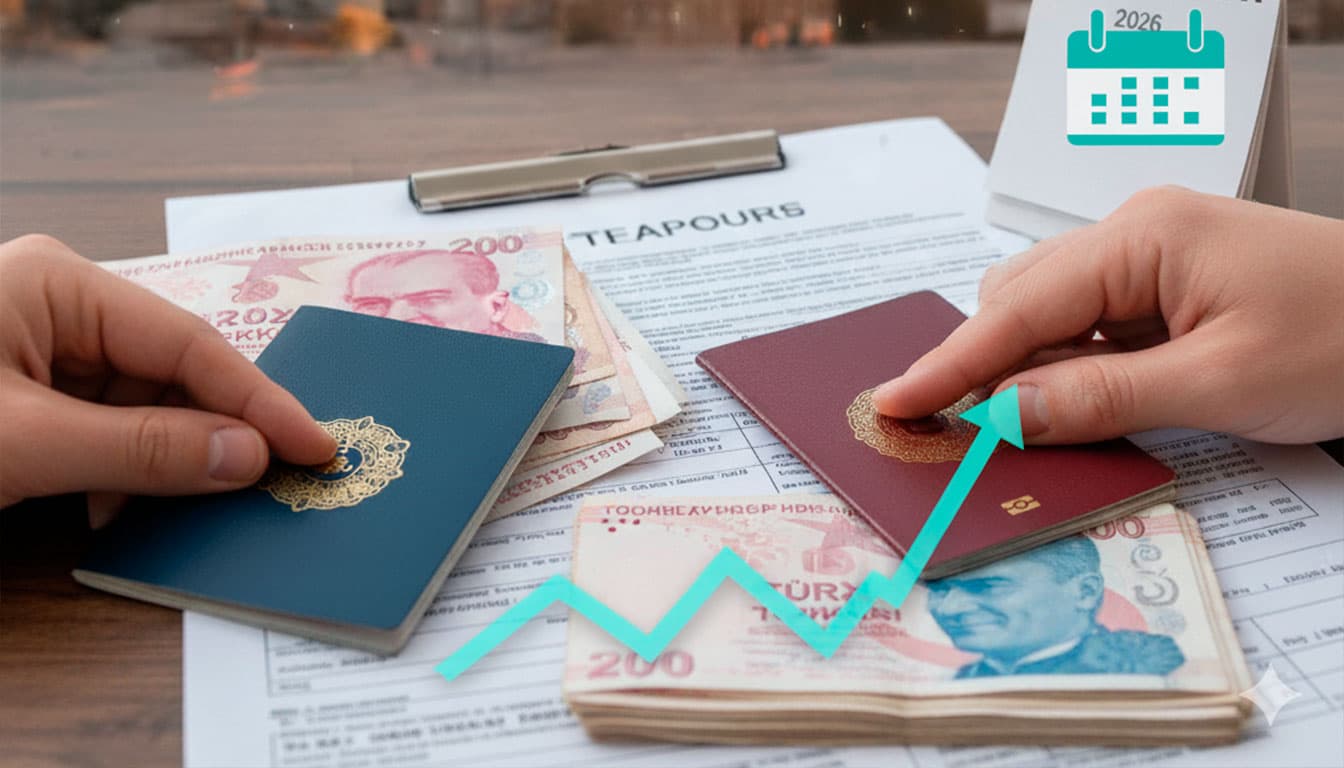
Taxes and fees in Turkey in 2026: what will change for Russians

Significant changes in tax legislation and the system of state fees are expected in Turkey from January 1, 2026. These innovations will affect both Turkish citizens and foreign residents, including Russians living in the country, owning real estate or planning to visit it. The purpose of this article is to provide comprehensive and up—to-date information about upcoming changes, analyze their potential impact on various categories of Russian citizens, and offer practical recommendations for preparing for new realities.

The general situation: Why do taxes and fees change?

The changes in the Turkish tax system are due to several key factors. The main driver is the annual revaluation coefficient (Yeniden Değerleme Oranı, YDO), which is calculated based on inflation data. YDO is expected to be about 23% by 2026. This coefficient directly affects the amount of government duties, taxes and fines, leading to their proportional increase. For comparison, last year the YDO was 43.93%, which confirms Turkey’s flexible financial policy in response to macroeconomic processes.

In addition, an important role is played by the revaluation of the cadastral value of real estate, which is carried out every four years. The current cycle has seen an increase in construction costs of about 650% and land prices of up to 800%. This means that many properties may become “elite”, which will lead to an increase in the tax burden for the owners.

Detailed overview of changes in taxes and fees for 2026

Below is a table with estimated new rates and amounts calculated based on the expected YDO revaluation ratio of 23%.

Payment category Old Amount (TL) New Amount (TL) Percentage of growth Short description / Who is it relevant for
Driver’s license (A, A1, A2) 1.883 2.316 23.0% For owners of motorcycles and scooters
Driver’s license (B) 5.678 6.984 23.0% For owners of passenger cars
Driver’s license replacement 15 18 20.0% In case of loss, damage or modification of data
Driver’s license renewal 340 418 22.9% Upon initial receipt or expiration
The value of the security 1.420 1.746 22.9% Government documents for various purposes
Passport (6 months) 2.359 2.902 23.0%
Passport (1 year) 3.449 4.242 23.0%
Passport (2 years old) 5.631 6.926 23.0%
Passport (3 years old) 8.000 9.840 23.0%
Passport (3+ years old) 11.274 13.867 23.0%
Passport cover 1.135 1.396 23.0% Separate fee for the form
The fee for traveling abroad 1.000 1.230 23.0% For all those leaving Turkey
ID Card Replacement 185 227 22.7% In case of loss, damage or change of data
ID card loss 185 227 22.7% If the card is lost
IMEI Registration 45.614 56.105 23.0% For phones imported from abroad

Note: All data is based on an expected revaluation ratio (YDO) of 23%. The actual figures may vary slightly after the official approval.

Other taxes and fees that will increase

  • Luxury housing tax (Değerli Konut Vergisi): now more objects will be taxed due to the increase in cadastral value.
  • State fee for registration of property: will increase in proportion to the increase in value.
  • Inheritance and gift tax: will be calculated based on new cadastral estimates.
  • Stamp duty: applies to legal contracts and transactions.
  • Capital gains tax: for the sale of real estate with a significant increase in value.
  • Contributions for the protection of cultural heritage: for objects in historical zones.

In some regions, the cadastral value has increased by 40 times, and in some cases by more than 1,000%. If today the tax is 10,000 TL, then in 2026 it may reach 50,000 TL and above.

How will the changes affect Russians?

  • Tourists: the fee for traveling abroad will increase from 1,000 TL to 1,230 TL. The increase may indirectly increase the cost of travel packages and accommodation.
  • Residents and property owners: will experience an increase in the cost of owning real estate, paperwork, and phone registration (IMEI). The latter amount will increase from TL 45,614 to TL 56,105, which is significant for owners of foreign devices.
  • Investors: Increased tax pressure will reduce investment returns and require a review of business models, especially with rising taxes on luxury housing and capital gains.

Recommendations: what to do now

For property owners

  • Check the updated cadastral value: contact the municipality or mukhtarlyk.
  • File an objection within 30 days if you consider the estimate to be too high (by September 8, 2025).
  • Unite with your neighbors: collective appeals are more effective.
  • Keep an eye on the Omnibus Bill — additional changes are possible.

General tips

  • Plan your budget in advance, taking into account the tax increase.
  • Apply for documents (passports, driver’s license) by the end of 2025 to avoid higher fees.
  • If you have difficult questions, consult with a lawyer or tax expert in Turkey.

Conclusion

The upcoming changes in the Turkish tax and collection system in 2026 will be an important event affecting all residents and investors. Understanding these reforms and preparing for them will help you avoid financial difficulties and effectively manage your assets. Careful planning and awareness will be the key to successful adaptation to new conditions. Keep an eye on official sources and, if necessary, seek professional help.

Overview of the Turkish Real Estate Market – October 2025

The Turkish real estate market in October 2025 presents a complex yet dynamic picture. Amid ongoing efforts to curb inflation and a significant rise in mortgage sales, the real value of housing continues to decline. This article, based on the latest data from the Turkish Statistical Institute (TÜİK) and the Central Bank of the Republic of Türkiye (TCMB), provides an in-depth analysis of current trends, the macroeconomic background, and 2026 forecasts for investors and homebuyers.

Macroeconomic Background and Its Impact on the Real Estate Market

Türkiye’s macroeconomic policies aimed at reducing inflation are directly influencing the property market. Key factors such as construction costs and credit interest rates shape the current market dynamics.

Inflation, Loan Rates, and Construction Costs

According to TÜİK, the Construction Cost Index (İnşaat Maliyet Endeksi) rose by 22.82% year-on-year in August 2025 [1]. Labor costs increased by 30.16%, outpacing the 19.17% rise in material costs — indicating mounting pressure on developers due to workforce expenses.

Indicator August 2025 (YoY, %) Source
Total Construction Cost Index 22.82% TÜİK
Material Index 19.17% TÜİK
Labor Index 30.16% TÜİK

Rental Regulation

On July 1, 2024, the 25% legal cap on rent increases for residential properties was lifted. As of October 2025, the new maximum legal rent increase stands at 38.36%, based on the 12-month average Consumer Price Index (TÜFE) [2]. This change is expected to make rental property investments more attractive.

Overall Market Statistics and Trends in 2025

Housing Sales and Mortgages

In September 2025, 150,657 residential properties were sold across Türkiye — a 6.9% increase compared to the same month last year [3]. During the first nine months of 2025, total sales reached 1.13 million units, up by 19.2% year-on-year.

The strongest growth was recorded in the mortgage segment, up 34.4% year-on-year (21,266 transactions), suggesting that buyers continue to use credit despite high interest rates, possibly due to inflation expectations.

Housing Price Index (KFE)

According to the Central Bank of Türkiye, the Housing Price Index (KFE) increased by 32.2% year-on-year in September 2025 [4]. However, due to high inflation, the real value of housing continues to decline for the 20th consecutive month — meaning prices rise in lira terms but lose purchasing power.

Regional Differences

City Sales (September 2025) Share of Total (%) Monthly KFE Growth (%)
İstanbul 24,119 16.0% 1.5%
Ankara 13,417 8.9% 2.3%
İzmir 8,544 5.7% 2.9%

İzmir and Ankara show higher monthly price increases (2.9% and 2.3%) than İstanbul (1.5%), indicating a demand shift toward less saturated metropolitan areas.

Foreign Buyer Activity

Sales to foreigners continue to decline. In September 2025, 1,867 properties were sold to foreign buyers — down 7.7% year-on-year [3]. Between January and September, the decline reached 12.6%, with foreign sales accounting for only 1.2% of total transactions.

Country Number of Properties Sold (September 2025)
Russia 267
Iran 202
Iraq 146
Germany 121
Ukraine 118

Property Segments: Residential and Commercial

Residential: Primary vs. Secondary Market

In September 2025, the secondary housing market dominated, accounting for 68.7% of all sales (103,540 units), up 7.8% year-on-year [3]. The primary market (new builds) represented 31.3% (47,117 units), with a 5.0% increase. This highlights strong demand for ready-to-use properties — assets that can immediately generate rental income or serve as inflation protection.

Commercial Real Estate

According to TCMB data, the Commercial Property Price Index (TGFE) rose by 31.9% nominally in Q2 2025, but fell 3.1% in real terms [5]. İzmir (+38.6%) and Ankara (+35.6%) outperformed İstanbul (+25.9%).

Growth Drivers and Risks

Growth Factors

  • Urbanization and migration to large cities sustain housing demand.
  • Real estate remains a key hedge against inflation.
  • Mortgage sales continue to grow despite high interest rates.
  • Government incentives and citizenship programs still support investment appetite.

Risks and Limitations

  • Falling real housing values may weaken investor confidence.
  • Exchange rate volatility creates uncertainty for foreign investors.
  • High borrowing costs limit mass affordability, despite credit growth.

Forecasts and Scenarios for Late 2025 and 2026

Analysts agree that 2026 will mark a year of recovery, provided that current macroeconomic policies continue and inflation declines as expected.

  • Rate cuts expected: Lower key rates in 2026 are likely to reduce mortgage costs and stimulate demand [6].
  • Sales growth: Overall housing sales are projected to increase by 15–20%, and commercial real estate by 10–15% [7].
  • Real price growth: As inflation slows, nominal housing prices are expected to rise faster than inflation for the first time in two years.

Cities such as Ankara, İzmir, and Antalya — with strong domestic demand and developing infrastructure — are expected to lead the market growth.

Practical Tips for Investors and Buyers

  1. Focus on real price trends (KFE) rather than nominal growth.
  2. Prioritize the secondary market (68.7% of all sales) for higher liquidity and faster returns.
  3. Use mortgages strategically as a hedge against inflation.
  4. Consider Ankara and İzmir for faster-growing markets.
  5. Check rental yield: with rent caps removed, returns up to 38.36% (October 2025) are possible.

Conclusion

The Turkish real estate market in October 2025 stands at a turning point. Strong mortgage activity and sustained sales support the sector’s resilience, but declining real prices and weakening foreign demand call for a cautious approach.

  • Resilient market: Sales volumes remain strong, especially in secondary housing.
  • Real value down: Nominal price growth (32.2%) still lags behind inflation.
  • 2026 outlook: Expected recovery with positive real price growth driven by rate cuts.

Frequently Asked Questions (FAQ)

According to KFE, the monthly growth in September 2025 is 1.5%. The average prices are checked with the analytical platforms.

Yes. In September 2025, mortgages accounted for 14.1% of all sales (+34.4% compared to last year).

The maximum rental growth is 38.36% (based on a 12-month TÜFE). The real profitability depends on the region and type of housing.

Sources and References

  1. TÜİK – Construction Cost Index, August 2025
  2. Hesapkurdu – Rent Increase Calculator (October 2025)
  3. TÜİK – Housing Sales Statistics, September 2025
  4. TCMB – Housing Price Index (KFE), September 2025
  5. TCMB – Commercial Property Price Index (TGFE), Q2 2025
  6. Modernada – Housing Loan & Interest Rate Forecast 2026
  7. Gökhan Aydınlı – Türkiye Real Estate Market 2026: Growth & Transformation

New Employment Conditions in Türkiye for Persons of Turkic Origin (Law No. 2527)

Introduction and Historical Context

Employment in Türkiye for foreigners of Turkic origin has always been regulated by special legislation, reflecting Ankara’s historical and cultural ties with the Turkic world. Until recently, the key legal document was Law No. 2527 “On the free exercise of professions and arts, and on employment in public or private institutions or workplaces by foreigners of Turkic origin in Türkiye,” adopted back in 1981.

This law, introduced during the Cold War era, aimed to facilitate the integration and employment of Turkic minorities living outside Türkiye by granting them significant advantages compared to other foreigners. In practice, it allowed them to work without a separate work permit—an important incentive for repatriation and professional mobility.

However, geopolitical changes and rising migration flows, especially from Central Asia and other regions, created the need to revise this outdated law. Against the backdrop of the growing influence of the Organization of Turkic States (OTS) and Türkiye’s “soft power” policy, a need arose to define more clearly who exactly can benefit from these privileges, in order to prevent abuse and avoid excessive competition in the domestic labor market.

What Changed on 10 October 2025

The key amendments regulating the employment of persons of Turkic origin entered into force with publication in the Official Gazette (Resmî Gazete) on 10 October 2025.

Parameter Before 10 October 2025 After 10 October 2025
Legal basis Law No. 2527 and old Regulation Presidential Decree No. 10476 of 10.10.2025
Definition of “Turkic Origin” Based on general criteria and ancestry Determined exclusively by Presidential decision
Employment conditions Relatively simple; mainly residence permit required Ten mandatory conditions introduced (see Section 3)
Mechanism of implementation Automatic right to work if criteria met All ten conditions must be met and approved by the President

The new regulation—Presidential Decree No. 10476—amended the Implementing Regulation of Law No. 2527. The main change is centralization of power: the authority to determine which communities are considered “of Turkic origin” (Türk soylu) and may enjoy special employment privileges now rests entirely with the President of the Republic of Türkiye [1].

Conditions and Requirements (Analysis of 10 Clauses)

The new regulation introduces ten mandatory conditions that must all be met to obtain the right to work under Law No. 2527. These requirements have significantly complicated the process and drawn criticism.

No. Requirement (in English) Original text (in Turkish) Comment and issues
1 Possession of a residence permit İçişleri Bakanlığınca ikamet izni verilmiş olması. Basic requirement.
2 Compliance with special professional laws Mesleğe ilişkin özel kanun niteliklerinin taşınması. Applies to regulated professions (doctors, lawyers, etc.).
3 Diploma equivalency confirmation Diplomaların denkliğinin onaylanması. Requires nostrification (denklik) by Turkish authorities.
4 No security risk Güvenlik açısından sakınca bulunmaması. Background check by security services.
5 Population registry record created Nüfus kayıtlarının oluşturulması. Technical registration requirement.
6 Membership in a professional organization Meslek kuruluşuna kayıtlı olunması. Needed for professions like engineering, law, etc.
7 Recognition of document equivalency Belgelerin denkliğinin kabul edilmesi. May apply to certificates or work experience.
8 Belonging to a community designated by the President Cumhurbaşkanı kararıyla tespit edilen topluluktan olunması. Depends on Presidential decision (not yet issued).
9 Inability to work in home country for reasons beyond control Kendi ülkesinde elinde olmayan sebeplerle mesleğini icra edememek. Highly subjective; requires proof of political or other constraints.
10 Ethnic and cultural difference from the majority population Vatandaşı olduğu ülkenin kâhir ekseriyetinden farklı etnik ve kültürel kimliğe sahip olmak. Excludes citizens of Turkic states; targets minorities.

Who Can Benefit and Who It Applies To

According to official clarifications, the law targets not citizens of OTS member states but Turkic minorities residing in other countries.

Target groups:

  • Turkic minorities without their own state: Uyghurs (China), Ahıska Turks, Crimean Tatars (Ukraine), and communities in the Balkans and Middle East.
  • Persons unable to work in their home country for political or uncontrollable reasons (clause 9).

Citizens of independent Turkic states (Azerbaijan, Kazakhstan, Kyrgyzstan, Uzbekistan, Turkmenistan) are effectively excluded under clause 10, since they are not an ethnic minority in their countries. For them, general rules under Law No. 6735 “On the International Workforce” continue to apply [3].

Statistics:

  • About 358,000 people of Turkic origin hold residence permits in Türkiye.
  • Roughly 89,000 already have official work permits [4].

Motives and Political Context

  1. Soft Power Tool: The law strengthens ties with Turkic communities, emphasizing Türkiye’s role as their protector and homeland.
  2. Labor Market Protection: Clause 10 controls migration flows and prevents competition with local workers.
  3. Humanitarian and Political Support: It creates a legal mechanism to assist Turkic minorities facing discrimination.

Deputy Chair Kürşad Zorlu noted that this is “an update of legislation demonstrating the Republic of Türkiye’s resolve to assume historical responsibility for our compatriots” [3].

Risks, Criticism and Gaps

  • Unclear origin criteria: Without a Presidential decision, the law is not operational.
  • Proof difficulties: Clauses 9 and 10 are subjective, opening room for corruption and abuse.
  • Centralization risk: Full authority granted to the President politicizes implementation.
  • Discrimination risk: Potential tension between Turkic foreigners and local workers.

Comparison and Consequences

Aspect Before 10.10.2025 After 10.10.2025
Right to work Relatively easy, almost automatic with residence permit Depends on meeting 10 strict conditions
Target group All persons of Turkic origin Only Turkic minorities
Political authority Decentralized (ministerial) Fully centralized at Presidential level
Economic impact Encouraged inflow of qualified labor Reduced mobility and migration flows

Conclusions and Outlook

The new regulation of 10 October 2025 is a double-edged measure. On one hand, it seeks to streamline migration policy and support vulnerable Turkic minorities. On the other, it introduces vague and rigid criteria that make employment procedures complex and non-transparent.

Key points to watch:

  1. Publication of the Presidential Decision defining eligible communities is crucial.
  2. Clarification of clauses 9 and 10 is essential for practical implementation.
  3. The number of beneficiaries is expected to remain limited; the law will serve humanitarian rather than broad migration purposes.

Frequently Asked Questions

Citizens of the independent Turkic states of Azerbaijan, Kazakhstan, Kyrgyzstan, Uzbekistan and Turkmenistan are not subject to the Law. No:2527. They are subject to the general rules of employment of foreign citizens according to the Law. No.6735 “On the International Labor force”.

Experts note that the law contains vague wording, especially in paragraphs 9 and 10, which creates a risk of corruption. Politicization of the process is also possible, since the President determines the circle of persons recognized as being of Turkic origin. This may cause difficulties in application and the risk of discrimination in the selection of candidates.

Ten conditions must be met: a residence permit, proof of qualifications and nostrification of a diploma, absence of a threat to security, registration in accounting and professional registers, recognition of documents and seniority, membership in an ethnic community designated by the President, and proof of inability to work in a profession in their country of residence.

The changes were made by the decision of the President. No:10476. Now the right to work is granted only if ten conditions are met. The definition of “Turkic origin” has been delegated to the Turkish President, and the automatic right to work has been abolished. The purpose of the amendments is to strengthen control and eliminate abuse of the status of “Turkic origin.”

Under the new terms, which entered into force on October 10, 2025, the law applies to Turkic minorities living outside Turkey and not having their own state, for example, Uighurs, Crimean Tatars, Turks, and others. They can work in Turkey if they cannot practice their profession in their country of residence or belong to a cultural and ethnic minority.

Sources and References

  1. MFY Legal – Free Work Rights for Citizens of Turkic States
  2. Ekonomim – Regulation on Employment of Turkic Origin Foreigners Amended
  3. Aksiyon – Kürşad Zorlu on Regulatory Amendment
  4. Haber 365 – Evaluation of the Regulation by Kürşad Zorlu

New traffic fines in Turkey 2025

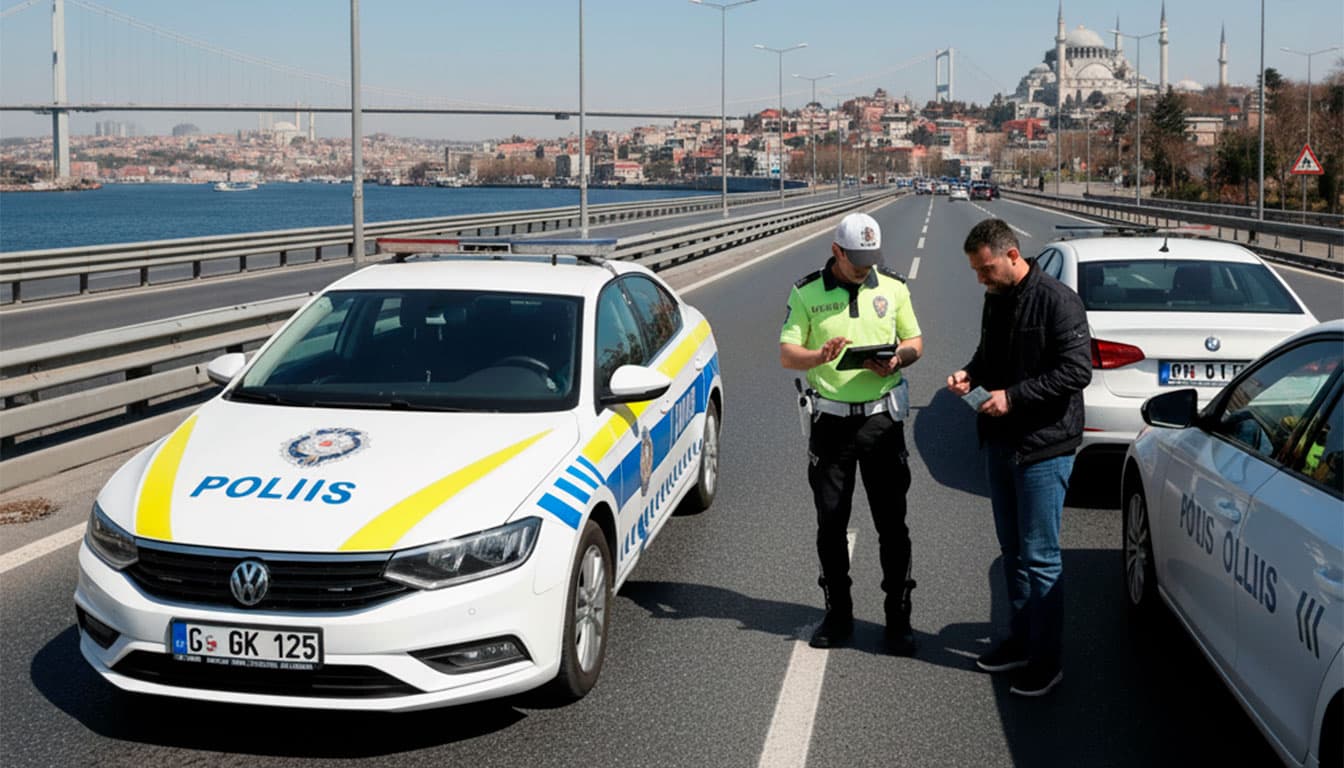
Every year, Turkey, in an effort to improve road safety and reduce accidents, tightens control over compliance with Traffic Regulations. The year 2025 was marked not only by the annual indexation of fines, but also by an active discussion in Parliament of new, stricter legislation. It is critically important for anyone who drives a car in Turkey — whether they are locals, expats or tourists — to be aware of these changes in order to avoid serious financial losses and legal problems.

In this article, we will analyze in detail the current fines for 2025, as well as clarify the most discussed issue of recent months: what is really happening with speeding tolerance and why rumors of fines “from 1 km/ h” have been exaggerated.

Current traffic fines in Turkey for 2025

Every year, according to the revaluation coefficient (Yeniden Değerleme Oranı), Turkish fines are indexed. In 2025, this growth was about 43.93% compared to the previous year. These amounts are valid until a new bill is passed, which is under consideration in the Grand National Assembly of Turkey (TBMM).

Below is a table of the most common violations and their current value in Turkish lira (₺) for 2025.

Violation Penalty (₺) Penalty with a 25% discount (₺)
Speeding by 10% to 30% 2 168 1 626
Speeding by 30% to 50% 4 512 3 384
Exceeding the speed limit by more than 50% 9 268 6 951
Running a red light 2 168 1 626
Drunk driving (first offense) 9 268 6 951
Driving without a license 18 706 14 030
Using a mobile phone while driving 2 168 1 626
Not using the seat belt 1 084 813
Parking in the wrong place 1 383 1 037
Violation of parking rules in places for the disabled 1 383 1 037

Important: If a fine is paid within 15 days of its discharge, a 25% discount is provided [1].

Speeding: The truth and myths about fines “from 1 km/h”

In late 2024 and early 2025, information was actively disseminated in the Turkish and Russian—language media that a 10% tolerance for speeding was allegedly being abolished in Turkey, and a fine would be issued for exceeding 1 km/h.

The official denial of the Turkish Interior Ministry

This information turned out to be a rumor, which was officially denied by the Ministry of Internal Affairs of Turkey (Içişleri Bakanlığı) [3], [4].

“Currently, the current legislation continues to apply a first-time speeding limit of 5 km/h within populated areas and 10 km/h outside populated areas.”

Thus, at the moment, the penalty for speeding begins to take effect only after exceeding the established limit by an amount exceeding this tolerance.

What will change with the adoption of the new law?

Despite the refutation of rumors, a new bill is indeed being discussed in the Turkish parliament, which will significantly toughen penalties and change the system of grading fines for speeding [5].

Instead of the old interest rate system (10-30%, 30-50%, 50%+) It is proposed to introduce a new, more detailed system based on a fixed excess in km/h.

Speeding (in km/h) — design changes

In a locality Proposed fine (₺) Additional sanctions
6-10 km/h 2 000
11-15 km/h 4 000
66 km/h or more 30 000 Deprivation of rights for 30-90 days
Outside the locality Proposed fine (₺) Additional sanctions
11-15 km/h 2 000
71 km/h or more 30 000 Deprivation of rights for 30-90 days

Note: These amounts and gradations are proposed within the framework of the draft law and may change before its adoption. However, they demonstrate the general trend of tougher penalties.

New and tougher penalties: Focus on Aggressive Driving

In addition to the annual indexation, the new bill aims to combat the so-called “traffic hooligans” (trafik magandasi) by imposing unprecedentedly high fines and long terms of deprivation of license for aggressive and dangerous driving.

Violation Proposed fine (₺) Additional sanctions
Driving with a revoked license 200 000
Driving under the influence of drugs 150 000
Drift (Drift Atma) 140 000 Deprivation of rights for 60 days, psychotechnical assessment
Dangerous driving (changing lanes, driving in oncoming traffic) 90 000 Deprivation of rights for 60 days, withdrawal of vehicle for 30 days
Harassment of another vehicle for the purpose of attack 180 000 Deprivation of rights for 60 days, withdrawal of vehicle for 30 days
Repeated violation (Red light, Phone) before 80 000 / 20 000 Disqualification for 30 days

How do I check and pay fines in Turkey?

The process of checking and paying fines remains the same. The following official resources are available for foreign drivers and cars with foreign license plates (payments by Yabancı Araç Ödemeleri):

Conclusion

Turkey is demonstrating a serious intention to make its roads safer by imposing not only heavy fines, but also comprehensive measures aimed at combating dangerous driving. Although the rumors about the abolition of speed tolerance turned out to be false, drivers should be extremely careful.

The main conclusion:

  • The current fines in 2025 have increased significantly due to indexation.
  • The tolerance to speeding (5 km/h in the city, 10 km/h outside the city) remains.
  • The new bill in TBMM provides for even higher fines and tougher penalties for aggressive driving, which may come into force in the near future.

Following the rules and knowing the current legislation is the best way to ensure comfortable and safe driving in Turkey.

Sources and links

  1. Sompo Sigorta. Trafik Cezası Ücretleri 2025
  2. Allianz. 2025 Trafik Cezaları Hakkında Her Şey
  3. Anadolu Ajansı. İçişleri Bakanlığı açıklaması
  4. BirGün. Hız sınırında yüzde 10 tolerans açıklaması
  5. Hürriyet / Bigpara. Trafik Cezaları Değişikliği 2025

Trabzon – Sochi ferry schedule

Up-to-date information about the Sochi – Trabzon ferry service

The first flight ended with a U-turn: the Sea Bridge ferry was sent back to Trabzon

The ferry service between Sochi and Trabzon, which was interrupted in 2011, faced a serious obstacle immediately after the first flight. The Sea Bridge ferry left Trabzon on November 5, 2025, but after standing at the Sochi roadstead for three and a half days, it did not receive permission to enter the Russian port.

On November 8, 2025, Sergey Turkmenyan, CEO of SVS Shipping, the organizer of the route, confirmed that the ship had been rejected and was sent back to Turkey. The ferry, carrying about two dozen passengers, returned to Trabzon on the afternoon of November 9th.

Chronology of the first flight and problems on board

The ship left the port of Trabzon at 21:40 Moscow time on November 5, heading for Sochi. The ferry arrived at the Sochi roadstead on the morning of November 6, but was not received at the seaport.

During the entire downtime, passengers, including children, remained on board without any information about further actions. The situation was complicated by the fact that a number of passengers had expired their legal stay in Turkey.

Upon returning to Trabzon on November 9, 2025, 18 Russian tourists were waiting on board for their scheduled flights on Monday.

Causes and consequences

The actual reversal of the ferry confirmed the previously expressed concerns of the Governor of the Krasnodar Territory, Veniamin Kondratiev, that the resumption of international ferry service through the port of Sochi has not been agreed upon and is technically impossible.

According to media reports, the key problem was the lack of coordination between the federal and regional authorities. The flight organizer, SVS Shipping, has received all the necessary permits from Rosmorrechflot and has registered the line by the end of 2027. However, according to Governor Kondratiev, no consent was received from the administration of the Krasnodar Territory.

Experts also point to two historical reasons why the ferry service was discontinued in 2014 and which remain relevant.:

  1. The insufficient infrastructure of the port of Sochi for the inspection of a large number of cargo vehicles that the ferry can transport (up to 200 cars and trucks).
  2. Competition for local agricultural producers from Turkish goods arriving by ferry.

Thus, the attempt to launch a ferry service, despite all the permits, ended in failure due to a conflict of interests and the lack of a unified position between federal and regional structures.

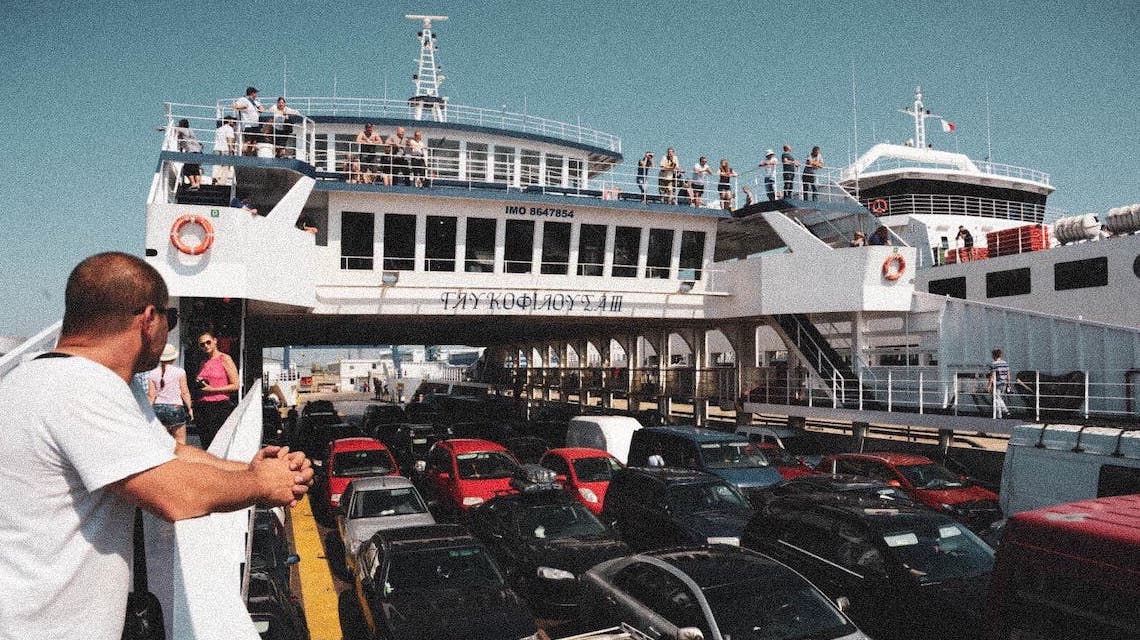
паром seabridge
The ferry is loading at the port of Trabzon, November 5, 2025

Sea Bridge ferry timetable

At the first stage, it was assumed that the ferry would carry only passengers. In the future, it was planned to resume the transportation of vehicles. The ferry was supposed to run twice a week. The duration of the sea voyage is about 12 hours.

Route Day of the week Departure Arrival
Trabzon — Sochi Wednesday, Saturday 21:00 09:00 (next day)
Sochi — Trabzon Thursday, Sunday 21:00 09:00 (next day)

Ticket prices and transportation

The cost of one-way tickets for the Sea Bridge ferry starts from 6,500 rubles.

Ticket category Cost (one way)
Seating position (economy class) from 6,500 rubles
A place in the cabin from 9,500 rubles
Transportation of a car from 30,000 to 35,000 rubles (depending on the size)

The schedule of the Trabzon – Sochi ferry can be tracked on the Port of Trabzon website.

About the Sea Bridge ferry

The Sea Bridge ferry is a cargo and passenger vessel (Ro-Pax) specially designed for this route.

  1. Capacity: Up to 450 passengers and 221 passenger cars.
  2. On-board facilities: A cafe, a discobar, a duty-free shop, a computer game room and children’s areas are available to passengers.
  3. Condition: The vessel was built in 1974 and underwent complete renovation in 1991 and 2024, which ensures its excellent technical condition.

Important note

Despite the official date, the launch of the ferry service has been repeatedly postponed for various reasons, including organizational issues and weather conditions. It is recommended to check with the carrier company SVS Shipping LLC for up-to-date information about flights and ticket availability.

Despite the fact that the technical flight of the ferry vessel took place on October 15, 2025, the resumption of international ferry service through the port of Sochi faced a serious obstacle. The Governor of the Krasnodar Territory, Veniamin Kondratiev, publicly expressed his position against the launch of the route at the present time, citing security issues.

“This is an unacceptable situation. Sochi is the main resort of our country, which is visited annually by millions of tourists from Russia and around the world. Our priority task is to preserve this status and ensure the safety of everyone who comes to our country on vacation,” said the Governor of the Krasnodar Territory.

Chronology of events earlier

Previously, the start of sea transportation in 2025 had already been postponed several times: At first, the date was January 23, then spring. Now, according to Turkmenyan, there are no exact dates anymore. According to SVS Shipping, the vessel is fully ready for operation, but the final decision remains with the port of Sochi, which continues to coordinate issues related to the reception of the ferry. At the same time, in February 2025, Kommersant, referring to the Southern Customs Administration, published a statement by the head of the department, Andrei Belyaev, that the Sochi checkpoint was fully ready to receive passengers and cargo.

According to information from the port, a place for ticket sales has already been determined and other organizational issues have been resolved, but there are still no changes in the schedule. Also, SVS Shipping still does not have an official online resource with information about flights and the possibility of pre-purchase of tickets. It remains to be hoped that all the difficulties that arise will be resolved in the near future, especially since the cruise service between Russia and Turkey is already operating and continues to expand.

Earlier, the general director of the carrier company said that the launch of the ferry service was postponed due to bad weather conditions, which prevented the ship from being painted, as well as due to the month of Ramadan in Turkey, which will begin on February 28 and end on March 29.

Even earlier, the first Trabzon – Sochi flight was officially scheduled for January 23, 2025, which never took place. Earlier, the resumption of ferry service between Sochi and the Turkish city of Trabzon was planned for mid-December 2024, which was interrupted 13 years ago. This was reported to TASS by Sergey Turkmenyan, a member of the Board of Directors of the Black Sea Union of Industrialists and Entrepreneurs and CEO of SVS Shipping LLC, the company that organizes and services this ferry route.

“Ferry traffic is resuming after 13 years. Our last ferry was in 2011, before that there were 5 passenger ferries from 1993 to 2011. The first flight is now officially scheduled for January 23. He will leave Trabzon and arrive in Sochi on January 24 in the morning,” Turkmenyan said.

The Sea Bridge ferry, designed to carry about 450 passengers and 220 passenger cars, will run twice a week — on Mondays and Thursdays. Departure from Trabzon is scheduled for 21:00 and arrival in Sochi at 9:00 the next day.

Various facilities for passengers are provided on board the ship: a cafe, a discobar, a duty-free shop, a computer game room and children’s areas. The cost of tickets starts from 6,000 rubles for a seat, from 20,000 rubles for a cabin seat, and transportation of a car will cost 30,000-35,000 rubles, depending on its size. The Sea Bridge ferry was built in 1974 in Italy and underwent a complete renovation in 1991 and 2020, ensuring its excellent technical condition. The ship has 112 cabins for 360 passengers and 93 seats. The ferry is 120.5 meters long and 18.5 meters wide.

Earlier on February 22, 2024, Yuri Vladimirov, the head of the Sochi Commercial Seaport, informed the RIA Novosti news agency about the company’s plans to buy a cargo and passenger ferry to stimulate tourism and begin transportation from Sochi to Trabzon, Turkey. According to him, there was a search for a suitable vessel. Vladimirov also noted that the port of Sochi has already prepared the necessary infrastructure for servicing the future ferry. Despite this, so far, over the past 10 years, it has not been possible to establish regular communication between the two countries.

“The possibility of buying a ferry for the Sochi-Trabzon route is being considered, given the obvious need for this type of transport. The ferry, designed to transport tourists in their private cars, will be in demand, but its capacity is limited: a maximum of 300 people and 60-80 cars. Unfortunately, at the moment there is no suitable vessel on the market,” Vladimirov said.

Earlier, the Turkish side promised the first flight of the Sochi—Trabzon ferry at the end of June 2023. However, many people had doubts about this news even then. After all, negotiations on the purchase of the vessel had just begun.

The launch date of the ferry between Trabzon and Sochi in 2023 was postponed due to insurance problems, it was planned to start flights at the end of May, Fatosh Solt, head of the Turkish travel agency operator Solt Tour, reported in early May 2023.

“We are working to find solutions, despite the problem, we plan to launch ferries after the elections in Turkey,” said Solt.

At the same time, the general director of the Sochi Seaport, Yuri Vladimirov, informed ATOR that no one had contacted them, had not indicated or agreed on specific dates.

“So far, this is just an initiative. As soon as the operator or the owner of the vessel comes to us and informs us that there is a ferry that is going to be put on line, we will be happy to start work,” explained the head of the seaport.

Earlier, Yuri Vladimirov, General Director of the Sochi Commercial Sea Port, commented that the launch of the ferry between Russia and Turkey was planned for May 1, 2023 and is under negotiation. Fatosh Solt, the head of the Turkish tour operator Solt Tour, also said in an interview with RIA Novosti that flights would be launched on May 10-11, and the ferry would run between the ports twice a week.

At the same time, in early 2023, according to the Yeni Safak newspaper, it was announced that ferry flights between Turkey and Russia would resume for the first time in nine years. Ferries were expected to run between the ports of Trabzon in Turkey and Sochi in Russia.

We plan to sign agreements on the resumption of ferry service on April 6, 2023. A ferry designed for 300 passengers, 200 cars, six buses and 12 containers will be used for the Sochi -Trabzon line. Flights will begin on May 1, and the gates to Russia will be open, said the head of the Trabzon Province Chamber of Commerce, Celebi.

At that time, the first ferry flight between Trabzon and Sochi was scheduled for early May 2023, but unfortunately no agreement had been signed between the parties concerned at that time. The idea of restoring ferries from Sochi to Trabzon has been around for a long time. From 1992 to 2014, ferry services were periodically established between the cities, which were interrupted in preparation for the 2014 Olympics due to safety requirements.

This initiative is expected to play an important role in the development of trade and tourism between the two countries. In addition, the resumption of ferry services can provide a more convenient and faster transport link between Trabzon and Sochi, which contributes to the development of the exchange of goods and services.

The last ferry service between these ports was performed in 2014. The restoration of ferry services between the two countries may be an important signal for the restoration of friendly relations between Turkey and Russia.

The ferry route between Sochi and Trabzon was popular among travelers who were carrying bulky luggage or planning to continue traveling in their own car through Turkey. Due to its size, the ferry could take on board not only passengers, but also cars. Every week on Monday evenings, a ferry departed from the Sochi Sea Station, which arrived in Trabzon in the morning. In turn, the ferry left Trabzon on Friday. The duration of the trip was about 12 hours.

The information was updated on November 9, 2025.

In Turkey, the “şartlı giriş” (conditional entry) has been canceled since February 1, 2025

Since February 2025, Turkey has officially abolished the “şartlı giriş” system of conditional entry, which previously allowed foreigners who violated the visa regime or were denied a residence permit to return to the country after leaving and paying a fine. Now there is no such possibility anymore: to re-enter, you must wait for the end of the visa quarantine established by citizenship.

This change is especially important for citizens of the CIS countries and the Middle East, whose mobility under tourist visas previously depended on this loophole. Violation of the terms of stay is now fraught with the inability to return to the country before the next allowable visa-free period.

Visa-free periods in 2025:

  • Ukrainian citizens can stay in Turkey for up to 90 days within a 180-day period.
  • Russians — a maximum of 60 consecutive days, but no more than 90 days in total for 180 days.
  • Citizens of Belarus — up to 30 consecutive days, no more than 90 days per year.
  • Kazakhstan — up to 30 days at a time, for a total of 90 days in 180 days.
  • Citizens of the United States, Canada, Bahrain, the United Arab Emirates, Saudi Arabia and Oman — up to 90 days within 180 days.
  • EU countries, Great Britain, Ireland and the Schengen states — also up to 90 days within six months.

Important: at the time of entry into Turkey, the passport must be valid for at least 120 days.

If you are planning a long-term stay in Turkey, study the new requirements for obtaining a residence permit and possible visa restrictions in advance. Now, without official permission and compliance with the visa framework, re-entry is impossible, even with the payment of a fine.

We recommend that you plan your trip carefully and do not exceed the allowed time limits in order to avoid a temporary ban on entry.

We will send you the current price

Leave your contact information. We will respond as soon as possible. No spam!

    Request a callback

    Leave your contact information. We will respond as soon as possible. No spam!

      Would you like to come for a free inspection tour?

      Leave your contact information. We will respond as soon as possible. No spam!

        Would you like a discount?

        Leave your contact information. We will respond as soon as possible. No spam!

          Would you like an online viewing?

          Leave your contact information. We will respond as soon as possible. No spam!

            Thank you for your request, our manager will call you back shortly

            The message was not sent, please write to us in the messenger.

            We will answer any questions

            Leave your contact information. We will respond as soon as possible. No spam!

              Object presentation

              Specify your contact information and download the presentation of this property in one click. No spam!

                Catalog of Istanbul apartments for living and investment

                Specify your contact information and download the catalog in one click. No spam!

                  How to choose the best investment option in real estate in Turkey?

                  Specify your contact information and download the checklist in one click. No spam!

                    What documents are required to obtain a residence permit

                    Specify your contact information and download the checklist in one click. No spam!

                      What documents are required to obtain Turkish citizenship?

                      Specify your contact information and download the checklist in one click. No spam!

                        💰 Money transfer is needed

                        Provide your contact information, a manager will contact you!

                          Are you leaving already?

                          Download: TOP 5 things to know before buying an apartment in Istanbul

                            🔍 Ищем лучшие предложения…
                            WhatsApp