















Step-by-step transaction procedure
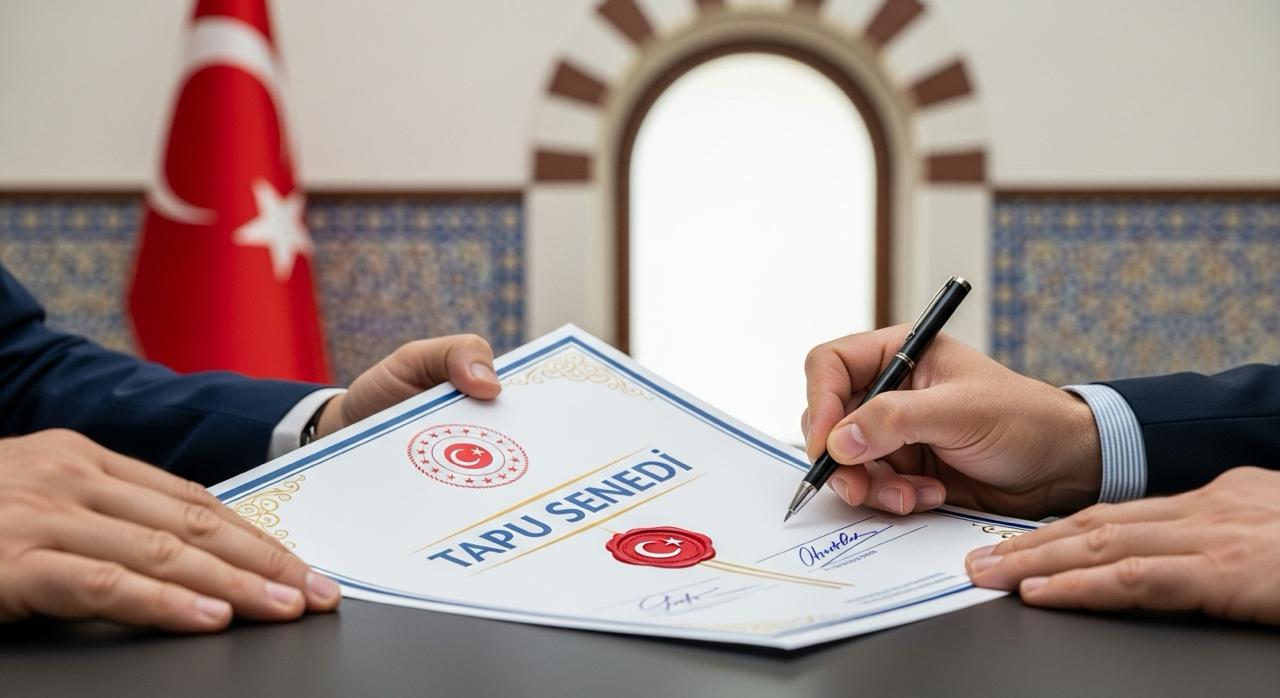
Step-by-Step Transaction Procedure: Buying Property in Istanbul
Purchasing real estate in Turkey for a foreign citizen is a legally regulated process in which each stage has clear legal consequences, deadlines, and responsible parties. Unlike in many countries, ownership rights in Turkey arise exclusively at the moment of registration with the Land Registry Office (Tapu ve Kadastro Müdürlüğü), not when the contract is signed or money is transferred. This means that until the TAPU title deed is issued, the buyer is not legally considered the owner, regardless of the amount already paid.
Below are the seven stages of a real estate transaction — from selecting the property to receiving the TAPU. Each stage explains what happens, who is responsible, where the client can stop the process, and under what conditions the deposit is refunded.
Stage 1. Property Selection
What happens. The buyer determines their goals (residence, investment, residence permit, citizenship) and budget. Based on these parameters, the real estate agency selects suitable properties and organizes viewings — either in person or remotely (video tours). The buyer selects a specific property and confirms their intention to proceed.
Responsibility. The agency must provide accurate information about the property: size, location, developer, the existence of an İskan (occupancy permit), and the construction status. The buyer makes the final decision independently.
Documents at this stage. The buyer’s passport (for identification).
Can the transaction be stopped? Yes, without any consequences. At this stage there are no financial or legal obligations.
Stage 2. Preliminary Property Check
What happens. Before paying a deposit, it is necessary to verify that the property corresponds to the declared characteristics. The following aspects are checked:
| Parameter | What is checked | Source |
|---|---|---|
| Seller’s ownership | Whether the seller is the actual owner | Land registry extract (TAPU) |
| Encumbrances (mortgage) | Whether there is a mortgage, lien, or seizure | Land Registry Office |
| Court restrictions | Whether there are court disputes or sale restrictions | Land Registry Office |
| Debts | Outstanding municipal or utility debts | Municipality, tax authority |
| İskan (occupancy permit) | Whether the building has an official occupancy permit | Municipality |
| Military zone | Whether the property is located in a restricted military zone | Military authority |
| Area compliance | Whether the actual area matches the TAPU record | Cadastral plan |
A basic check of the property status can also be conducted online through the portal parselsorgu.tkgm.gov.tr, which shows parcel information without revealing the owner’s personal data.
Responsibility. The agency organizes the inspection and provides the results to the buyer. Legal due diligence is recommended to be conducted with the involvement of an independent lawyer acting in the buyer’s interest.
Can the transaction be stopped? Yes, without consequences. No deposit has been paid yet.
Stage 3. Paying the Deposit and Signing the Preliminary Contract
What happens. After the decision is made, the buyer pays a deposit and signs a Preliminary Sales Agreement (Ön Satış Sözleşmesi). The agreement is prepared in two languages (Turkish and the buyer’s native language) and in two copies.
Deposit amount. Typically ranges from 5% to 25% of the property price depending on the agreement between the parties and the type of property (primary or secondary market). In some cases, when reserving from a developer, the deposit may be fixed (for example, $5,000).
The legal nature of the deposit is critically important. The Turkish Code of Obligations (No. 6098) distinguishes two types of payments, and the wording in the contract determines whether the money will be refunded if the deal is canceled.
| Type of payment | Legal article | If the buyer cancels | If the seller cancels |
|---|---|---|---|
| Bağlanma Parası (binding payment) | Article 177 | Refunded unless the seller proves damages | Refunded to the buyer |
| Cayma Parası (withdrawal payment) | Article 178 | The buyer loses the deposit | The seller returns double the amount |
If the type of payment is not specified in the contract, the court treats it as bağlanma parası, meaning a refundable deposit. This is confirmed by a decision of the Turkish Court of Cassation (Yargıtay), 13th Civil Chamber, dated 31.05.2017.
Important. The preliminary contract does not transfer ownership. According to the official position of the Turkish Land Registry Directorate, such agreements merely record the parties’ obligation to complete the sale in the future.
Responsibility. The agency prepares the contract draft. The buyer is advised to involve an independent lawyer to review the terms before signing.
Can the transaction be stopped? Yes, but with financial consequences depending on the deposit type. If the deposit is classified as cayma parası, the buyer loses it. If it is bağlanma parası or unspecified, the deposit is refundable.
Stage 4. Document Preparation
What happens. While the legal checks continue, the buyer prepares the documents required for registration with the Land Registry.
| Document | Where issued | Time | Notes |
|---|---|---|---|
| Tax Identification Number | Tax Office | 1 day | Mandatory for all transactions |
| Bank account | Any Turkish bank | 1–2 days | Required for payment transfer |
| Notarized passport translation | Notary | 1 day | Certified translator required |
| 2 biometric photos | Photo studio | 1 day | 4×6 format |
| Property valuation report | Licensed valuation company | 3–7 days | Mandatory for foreigners |
| DASK | Insurance company | 1 day | Mandatory earthquake insurance |
| Military clearance | Military authority | 1–30 days | Usually a formality |
Power of attorney. If the buyer cannot attend the title transfer personally, a power of attorney can be issued through a notary or Turkish consulate.
Stage 5. Payment
What happens. The buyer transfers the full price of the property (minus the deposit previously paid) to the seller’s account through the banking system. Cash payments are not recommended and are not considered confirmation for the Land Registry Office.
DAB (Döviz Alım Belgesi) — a currency exchange certificate. This is mandatory for foreign buyers. The essence is that the buyer must convert foreign currency into Turkish lira through a Turkish bank and obtain a DAB certificate confirming the legality of the funds. Without this certificate, the Land Registry Office will not accept the documents for the TAPU transfer.
Payment procedure when purchasing in installments. If the property is purchased from a developer with an installment plan, the payment schedule is fixed in the contract. The TAPU may be transferred either after the full payment has been made or with an encumbrance (a mortgage in favor of the developer) — this depends on the terms of the specific contract.
Responsibility. The buyer must ensure that the funds are transferred in full and within the established deadlines. The bank is responsible for the correct issuance of the DAB certificate. The seller must confirm receipt of the funds.
Can the transaction be stopped? Formally yes, but at this stage the buyer has already transferred the main amount. The return of funds is possible only through court proceedings if the seller refuses to transfer the TAPU. A deposit classified as cayma parası is not refunded.
Stage 6. Signing the Deed and Transfer of TAPU
What happens. This is the key stage where ownership is legally transferred at the Land Registry Office (Tapu ve Kadastro Müdürlüğü) in the presence of both parties or their representatives and a sworn translator.
Since 2023, TAPU transfer can also be carried out through a notary, simplifying the procedure.
Steps in the land registry office:
- Appointment booking via randevu.tkgm.gov.tr or by phone Alo 181
- Submission of documents
- Registry checks
- Payment of the title transfer tax (4%)
- Signing the transfer documents
- Issuance of the new TAPU title deed
Stage 7. Post-Purchase Procedures
After receiving the TAPU, the buyer transfers utilities (electricity, water, gas, internet) into their name and begins full ownership and use of the property.
| Action | Where it is arranged | Required documents |
|---|---|---|
| Electricity | Electricity distribution company | TAPU, passport, tax number |
| Water supply | İSKİ (for Istanbul) | TAPU, passport, tax number |
| Natural gas | İGDAŞ | TAPU, passport, tax number |
| Internet | Provider (Türk Telekom etc.) | TAPU, passport, tax number |
| Registration with the building management | Management company (Yönetim) | TAPU |
Important. To connect utilities, the property must have an İskan (Yapı Kullanma İzin Belgesi) — an occupancy permit issued by the municipality. If the İskan is missing, connecting utilities may be difficult or impossible.
Responsibility. The agency assists with these procedures. The buyer pays the connection costs (approximately $200–300 in total).
Summary table: buyer’s expenses
| Expense item | Amount | Notes |
|---|---|---|
| Title deed transfer tax | 4% of the cadastral value | Legally shared between buyer and seller, but in practice usually paid by the buyer |
| Valuation report (Ekspertiz) | 3,000 – 5,000 ₺ | Mandatory for foreigners |
| Notarized passport translation | 1,000 – 2,500 ₺ | — |
| Sworn translator | 500 – 1,000 ₺ | At the TAPU transfer stage |
| DASK (earthquake insurance) | 150 – 750 ₺ / year | Mandatory |
| DAB (currency exchange certificate) | from 6,000 ₺ | Mandatory for foreign buyers |
| Utility connection | ~$200–300 | Electricity, water, gas, internet |
| Lawyer (recommended) | 5,000 – 10,000 ₺ | Independent lawyer representing the buyer |
The total additional expenses usually amount to approximately 5–7% of the property value.
Summary table: buyer’s rights at each stage
| Stage | Can the transaction be stopped? | Deposit refund | Responsible party |
|---|---|---|---|
| 1. Property selection | Yes, without consequences | No deposit paid | Buyer |
| 2. Preliminary inspection | Yes, without consequences | No deposit paid | Agency + lawyer |
| 3. Deposit and contract | Yes, with financial consequences | Depends on the deposit type in the contract (Articles 177–178 TCO) | Buyer + lawyer |
| 4. Document preparation | Yes, with financial consequences | Same conditions as stage 3 | Buyer + agency |
| 5. Payment | Formally yes, but funds have already been transferred | Refund possible only through court or agreement between the parties | Buyer + bank |
| 6. TAPU transfer | Before signing — yes; after signing — only through court | After registration — only through legal procedure | Land Registry Office |
| 7. Post-sale procedures | The transaction is completed | — | Buyer + agency |
Sources
[1] Invest in Türkiye — Acquiring Property and Citizenship. Official portal of the Presidency of the Republic of Türkiye.
[2] Bayraktar Attorneys at Law — Down Payment (Kapora) in Turkey: Legal Framework.
[3] Imtilak — Legal aspects of buying property in Türkiye.
[4] Deal TR — Title Deed Transfer Turkey (Tapu): Full Guide for 2026.